Historical Site
Dali Ancient City
Dali, China
3-4 hours
About
The existing city layout was constructed in the 15th year of the Hongwu reign in the Ming Dynasty (1382), adopting a neat chessboard-style pattern of nine main streets and eighteen alleys, well-preserved Ming Dynasty city walls and classic Bai ethnic courtyard buildings. As the cultural core of Dali’s famous scenery of Wind, Flowers, Snow and Moon, it perfectly combines profound historical heritage, Bai folk customs, literary and artistic vibes, and bustling commercial nightlife.
Different from quiet rural ancient towns like Xizhou and Shuanglang, it is the transportation hub of Dali’s core scenic areas.
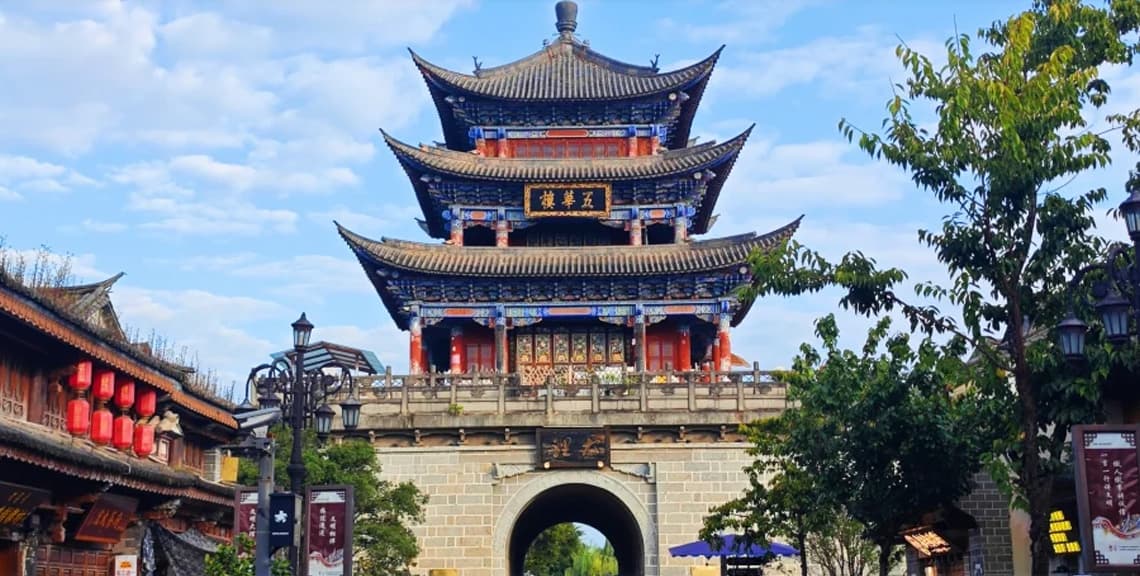
Core highlights include the iconic South Gate (Chengen Gate) with the inscribed calligraphy of “Dali” by Guo Moruo, Wuhua Tower as the highest overlook of the old town, bustling Fuxing Road, literary Renmin Road, laid-back Foreigner Street, tranquil Honglongjing Water Lane and the Bed Sheet Factory Art Zone. It is the starting point for trips to Chongsheng Temple Three Pagodas, Cangshan cable car stations and Erhai Lake cycling routes.
Travel Tips
- Take multiple city buses including No.4, No.19 and C10 loop lines directly to the South Gate stop
- The overall ancient town block is open for free without reservation
- Wear soft non-slip walking shoes for long walks on bluestone roads and uneven alley steps
- The plateau ultraviolet rays are strong, so prepare sunscreen, sunglasses and sun hat
- A thin windbreaker is needed for cool mountain wind at night
- Do not climb the ancient city wall randomly, carve on historic buildings or damage old courtyard structures
- Drones are restricted in the urban core area for cultural relic protection and crowd safety
Facilities
Gift ShopRestaurantPhotography Allowed
AdmissionFree Entry
Opening Hours
Mon00:00 - 23:59
Tue00:00 - 23:59
Wed00:00 - 23:59
Thu00:00 - 23:59
Fri00:00 - 23:59
Sat00:00 - 23:59
Sun00:00 - 23:59
Best Time to Visit
Weekday afternoons starting from 16:00 to avoid massive tourist crowds