Religious Site
Jiming Temple
Nanjing, China
1-2 hours
About
Founded in the Western Jin Dynasty, the temple dates back more than 1,700 years, formerly known as Tongtai Temple. Emperor Wu of Liang devoted himself to religion here four times and helped establish the vegetarian tradition of Chinese Buddhism. Rebuilt and renamed by Emperor Zhu Yuanzhang in the Ming Dynasty, it stands at the eastern foot of Jilong Hill, adjacent to Ming City Wall and Xuanwu Lake. Its signature Bhaisajyaguru Pagoda (Medicine Buddha Pagoda), a seven‑storey octagonal tower, once served as the filming stand‑in for Leifeng Pagoda in the classic TV drama Legend of the White Snake.
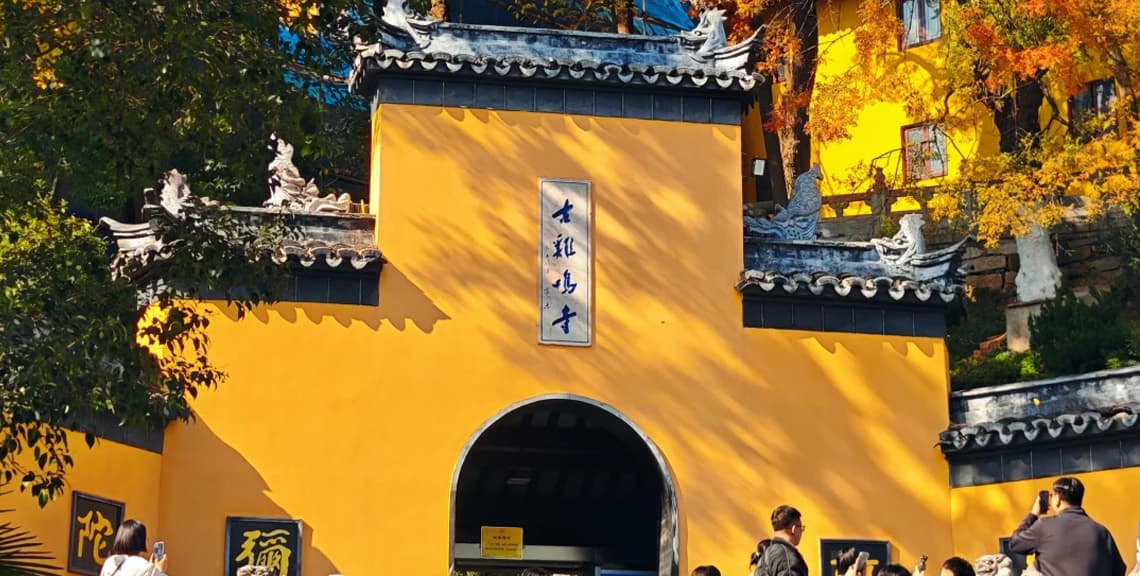
Core highlights include Pilu Main Hall, Guanyin Hall with the backward‑facing Guanyin statue, Bhaisajyaguru Pagoda, Rouge Well (Humiliation Well), Humeng Tower and vegetarian dining hall. Distinguished by striking yellow temple walls and black‑tiled roofs, it frames spectacular city views overlooking Xuanwu Lake and Zifeng Tower. The cherry‑blossom avenue outside the gate draws crowds every spring. Blending millennium‑old Buddhist heritage, Southern‑Dynasty historical relics and elegant Jiangnan aesthetics, it is a beloved destination for pilgrimage, blessing, ancient‑style photography and cultural sightseeing in downtown Nanjing.
Travel Tips
- Purchase real‑name tickets online via official WeChat mini‑program or scan QR‑code on‑site
- Take Metro Line 3 / Line 4 to Jimingsi Station Exit 5, walk for around 5 minutes to the South Gate
- Light‑coloured outfits are recommended for photography against yellow temple walls
- Do not step over temple thresholds; keep voices low within prayer halls for religious respect
- No photographing Buddha statues inside halls
- Drones are strictly forbidden within the temple compound
- Taste traditional vegetarian noodles at Baiweizhai inside the scenic zone
Facilities
Gift ShopRestaurantPhotography Allowed
Admission
¥10/ adult
Child¥5
Senior¥5
Opening Hours
Mon07:30 - 17:00
Tue07:30 - 17:00
Wed07:30 - 17:00
Thu07:30 - 17:00
Fri07:30 - 17:00
Sat07:30 - 17:00
Sun07:30 - 17:00
Best Time to Visit
Late March‑early April for cherry blossoms