Religious Site
Potala Palace
Lhasa, China
3-4 hours
About
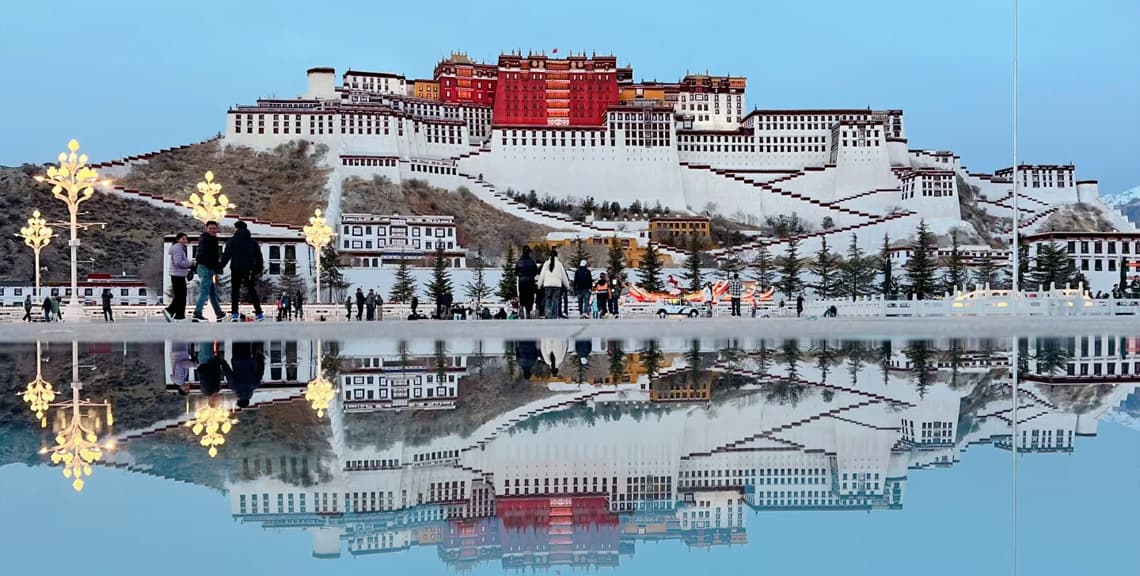
Initially constructed by Songtsen Gampo for Princess Wencheng in the Tubo Dynasty, it was continuously expanded in later centuries, integrating the functions of royal palace, Tibetan Buddhist monastery and defensive fortress.
Divided into two main architectural parts: the white outer White Palace and the red central Red Palace. The White Palace served as the winter residence and political office of the Dalai Lama, featuring the grand Eastern Main Hall and the luxurious Sunlight Hall. The Red Palace focuses on religious worship and memorial halls, housing the magnificent stupa tombs of successive Dalai Lamas, among which the 5th Dalai Lama’s stupa is the most resplendent, inlaid with countless precious gems. Preserved inside are massive ancient murals, thangka paintings, Buddhist scriptures and sacred cultural relics, representing the pinnacle of Xizang’s traditional architecture, religion and art. It is the most iconic spiritual and geographical symbol of Lhasa and the Qinghai-Xizang Plateau.
Travel Tips
- Take public buses No.1, 8, 17 or 24 to Baita Bus Stop, then walk 5 minutes to the South Gate for security inspection
- Taxis directly reach the South Gate with a fare of 10–15 RMB
- All tickets must be reserved in real name via the official WeChat mini-program “Potala Palace Ticket Booking System”
- One ID card can only make one valid reservation within 7 days
- Wear sturdy non-slip sneakers, as the climbing route consists of long steep stone steps
- Plateau altitude sickness is common, so prepare anti-altitude-reaction medicine and sufficient drinking water
- Strict dress code applies: sleeveless tops, shorts, ultra-short skirts are not permitted for entry
- No photography, video recording, lighters, sharp tools and bottled liquids are allowed inside the palace buildings
- Portable oxygen cylinders need to be stored at the mountain foot and cannot be carried into the core halls
- Drones are fully banned in the entire protected area for cultural relic preservation and public safety
Facilities
Gift ShopRestaurantPhotography Allowed
Admission
¥200/ adult
Child¥100
Senior¥100
Opening Hours
MonClosed
Tue09:00 - 15:40
Wed09:00 - 15:40
Thu09:00 - 15:40
Fri09:00 - 15:40
Sat09:00 - 15:40
Sun09:00 - 15:40
Best Time to Visit
Weekday morning time slots to avoid overwhelming tourist groups