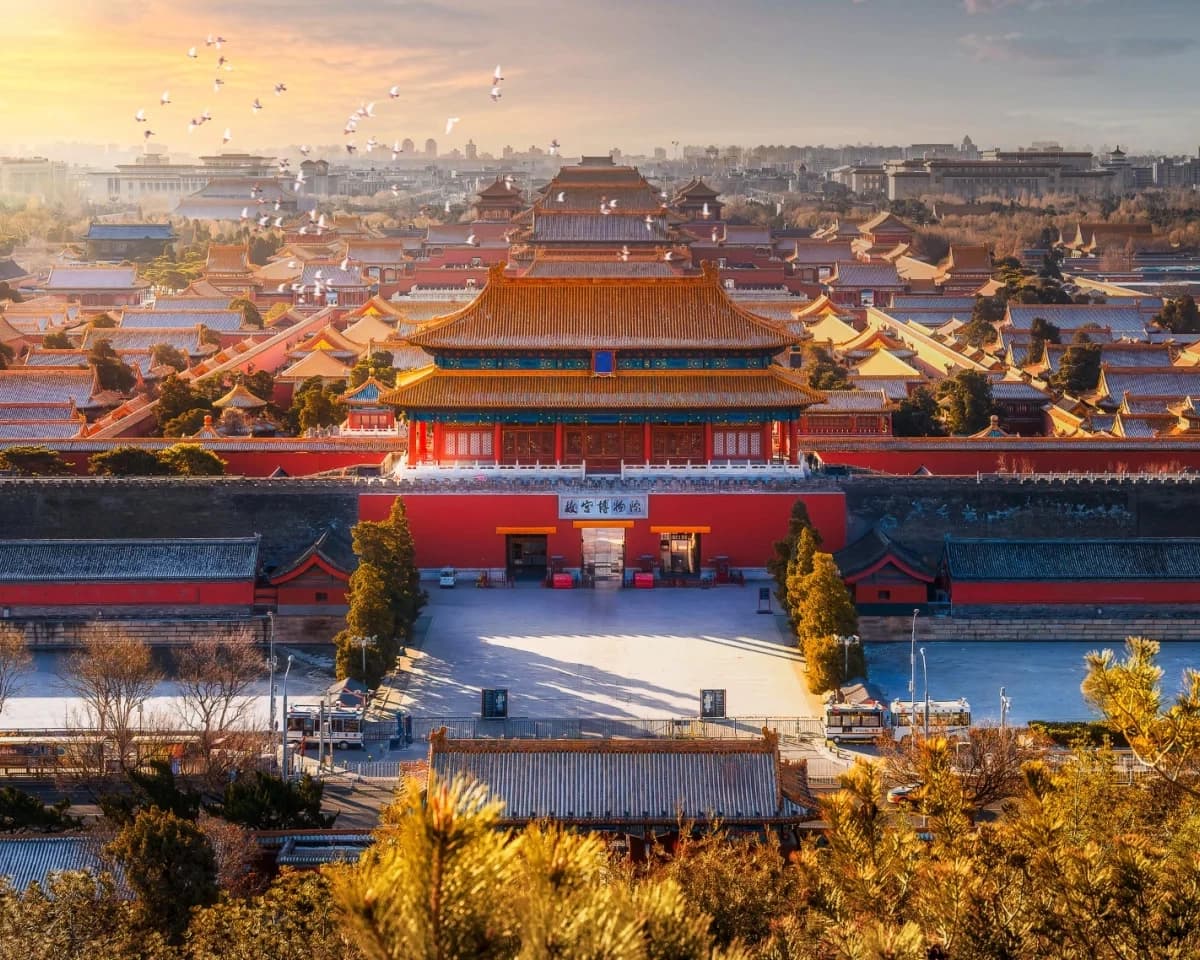
The Forbidden City is not the kind of attraction where you simply buy a ticket upon arrival; it is a destination that requires booking in advance and planning your route beforehand. Focus on the Central Axis for a sense of imperial grandeur, the side galleries for a glimpse into court life, and the special exhibition halls for rare and priceless treasures.
Forbidden City Quick-View Card
Admission Tickets:
Peak season (April 1 – October 31): 60 RMB
Off-season (November 1 – March 31): 40 RMB
Treasure Gallery ticket: 10 RMB
Clock and Watch Gallery ticket: 10 RMB
The Palace Museum does not sell tickets on-site. All visitors, including foreign nationals, are required to make a real-name reservation online in advance. If you find it difficult to secure tickets yourself or are concerned about payment failures, you might consider using services such as ChinaTravelElite or a customized tour provider to assist with the reservation.
Opening Hours:
April 1 – October 31: 8:30–17:00; November 1 – March 31: 8:30–16:30.
Why is it called the "Forbidden City"?
This was once the place where Ming and Qing emperors handled state affairs and lived their daily lives. With towering walls and strictly guarded gates, the complex was inaccessible to ordinary people, who could neither approach it at will nor enter or leave freely. Because it was an exclusive imperial precinct, it was known among the populace as the "Forbidden City." Today, it is more commonly known as the "Palace Museum" or the "Forbidden City."
When is the most comfortable time to go?
Recommended Seasons
Spring: April to early June
The weather is crisp and refreshing with clear skies; temperatures generally range from 10°C to 22°C, making it ideal for extended walking.
Autumn: September to October
The weather is cool and pleasant with soft lighting—an excellent time for photographing the Forbidden City—and there are relatively fewer domestic tour groups.
Try to avoid:
Mid-summer (July–August): Hot, humid, and muggy, with temperatures reaching around 30°C; the presence of many student and family tour groups makes queuing and walking more exhausting.
Spring Festival, the May Day holiday, and the National Day "Golden Week": Massive crowds and tight ticket availability often lead to a compromised experience.
Small strategies for the day
It opens around 8:30 AM, but people may start queuing before 8:00 AM. Arrive as early as possible if you want to take photos of the site without crowds.
The peak time for entry is around 10:00 AM; try to avoid this time if you can.
After 3:00 PM, the area around the North Gate and the side halls is usually quieter. However, keep the closing times in mind: around 4:30 PM in winter and 5:00 PM in summer.
Allow at least 2–3 hours if you plan to walk only along the central axis; if you wish to explore the Eastern and Western Palaces as well as the special exhibition halls, it is best to set aside half a day or even a full day.
Recommended Route
The Forbidden City is vast, so don’t try to cover too much ground. Choose one main route first, then add extra stops based on your personal interests.
Route 1: Quick Visit (2–3 hours)
If you have limited time, this route is a great choice.
Meridian Gate → Gate of Supreme Harmony → Pavilion of Hongyi → Hall of Supreme Harmony → Hall of Central Harmony → Hall of Preserving Harmony → Gate of Heavenly Purity → Palace of Heavenly Purity → Hall of Union → Palace of Earthly Tranquility → Imperial Garden → Gate of Divine Might
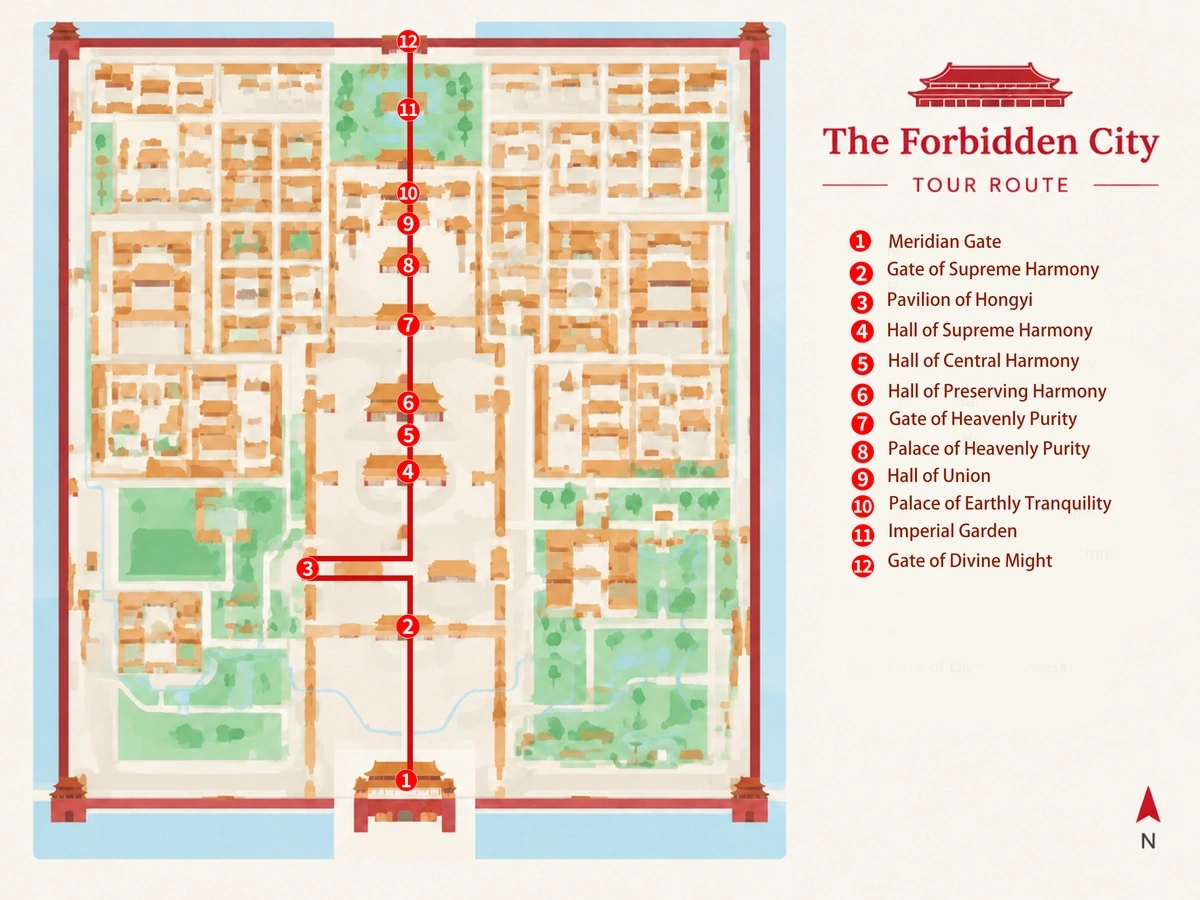
1792034279997-jk30r9mv.webp
Route 2: Half-Day Tour
Meridian Gate → Hall of Martial Valor → Gate of Supreme Harmony → Hall of Supreme Harmony → Hall of Central Harmony → Hall of Preserving Harmony → Palace of Heavenly Purity → Palace of Union and Peace → Hall of Terrestrial Tranqu
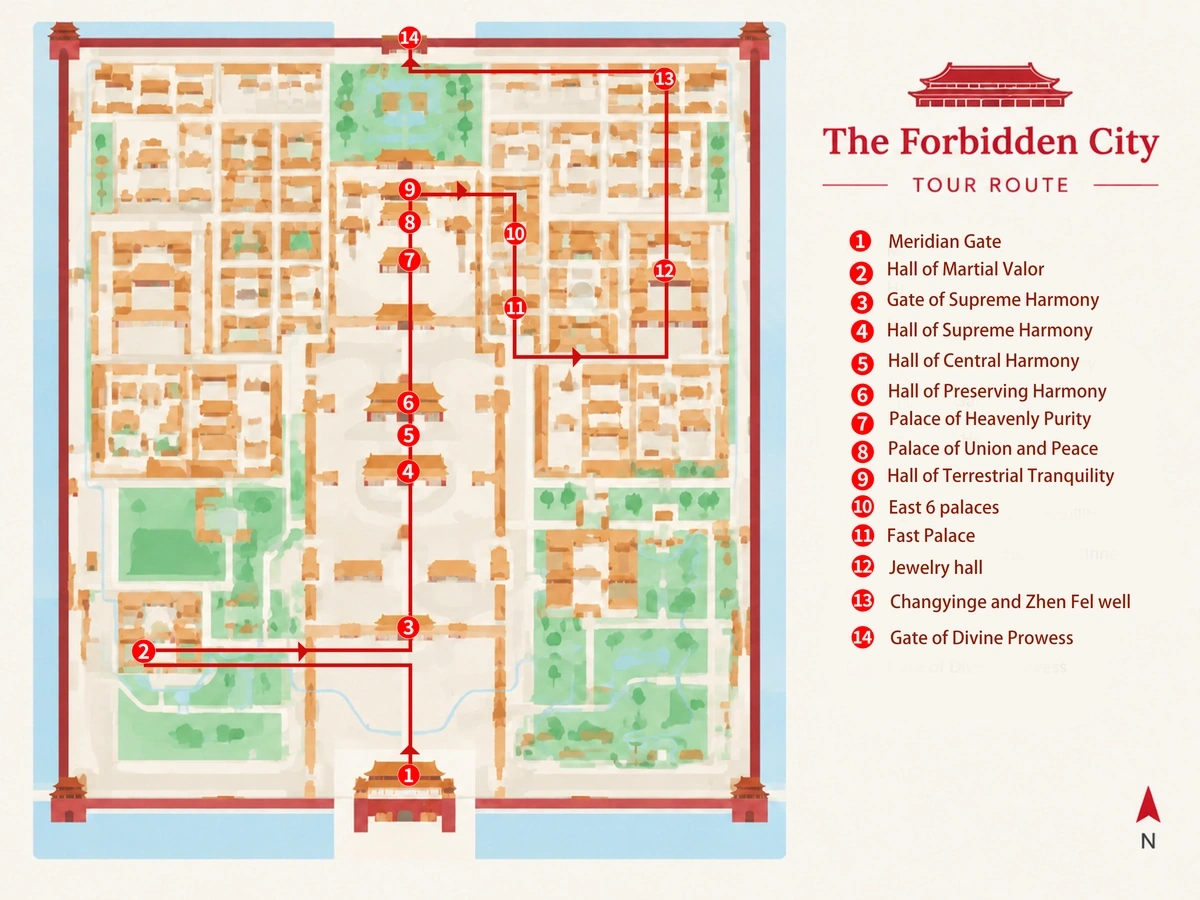
Route 2
Alternatively, you could choose Route 1 and combine it with a visit to either the eastern section of the Forbidden City (the Six Eastern Palaces, the Palace of Tranquil Longevity, the Gallery of Treasures, and the Gallery of Clocks and Watches) or the western section (the Six Western Palaces, the Hall of Martial Valor, the Hall of Literary Glory, etc.) to create a half-day itinerary.
Route 3: One-Day Trip
Meridian Gate → Furniture Gallery → Hall of Military Prowess → Hall of Military Prowess → Gallery Of Historic Architecture → Hall of Wenhua → Outer court → Palace of Benevolent Tranquility → West 6 palaces → Imperial Garden → Inner Court → East 6 Palaces → Clock Hall → The Tools Of War Gallery → Jewelry hall → Gate of Divine Prowess
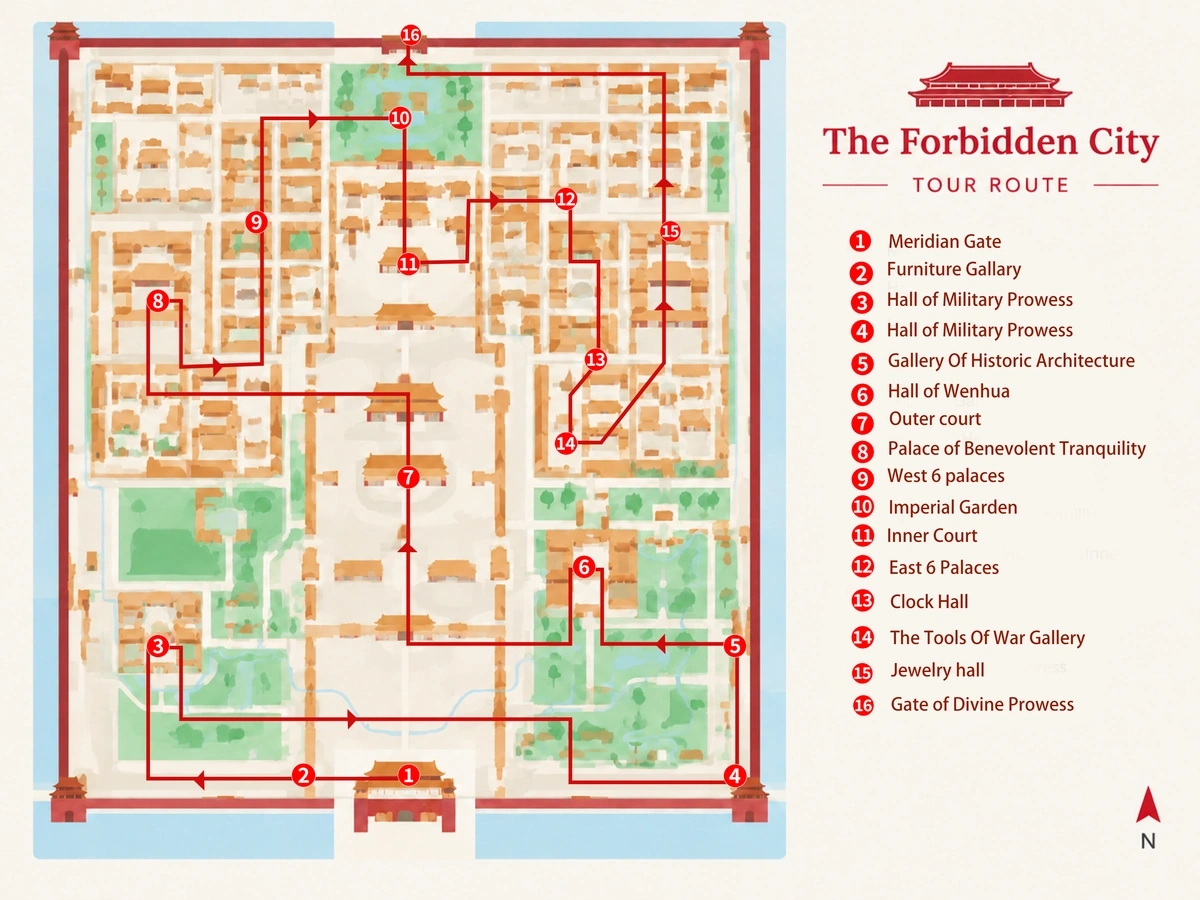
Route 3
What are the highlights to focus on when visiting the palace?
If you cannot see everything, focus on these six areas. They represent, respectively, the grandeur of the Forbidden City’s state affairs, the emperor’s living quarters, the empress’s main palace, the imperial gardens, the imperial collections, and timekeeping instruments.
1. Hall of Supreme Harmony (Taihedian) — The "Showpiece" of the Forbidden City
Location: The central axis of the Outer Court; reached immediately after passing through the Gate of Supreme Harmony.
Highlights: The largest hall in the Forbidden City, covering an area of approximately 2,377 square meters; features "golden brick" flooring and an ornate caisson ceiling with dragon motifs; the venue for major ceremonies such as imperial enthronements, royal weddings, and the commissioning of generals for military campaigns.
Best for: First-time visitors to the Forbidden City and those wishing to experience the grandeur of the imperial court.
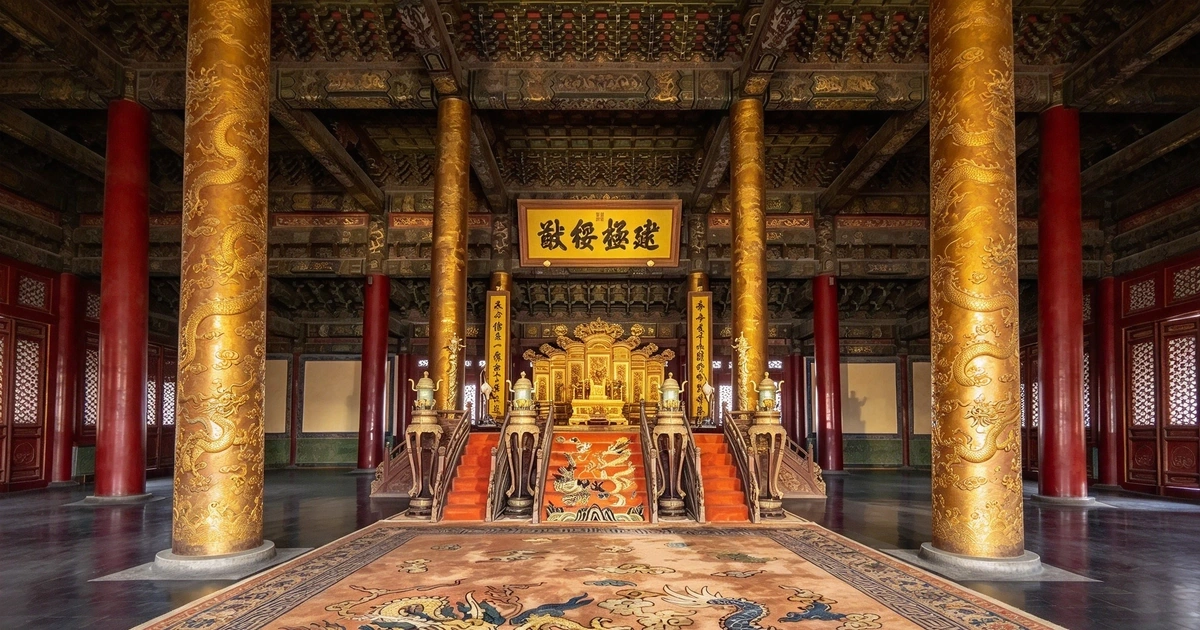
Hall of Supreme Harmony
2. Palace of Heavenly Purity (Qianqing Gong) — The Emperor's Primary Living Quarters
Location: Situated on the central axis of the Inner Court, this key palace lies just beyond the Gate of Heavenly Purity.
Highlights: Served as the sleeping quarters for Ming Dynasty emperors; the structure features two levels and a nine-bay layout, designed to accommodate both daily living and security needs.
Recommended for: Those interested in the emperor's daily life and the protocols of the Inner Court.
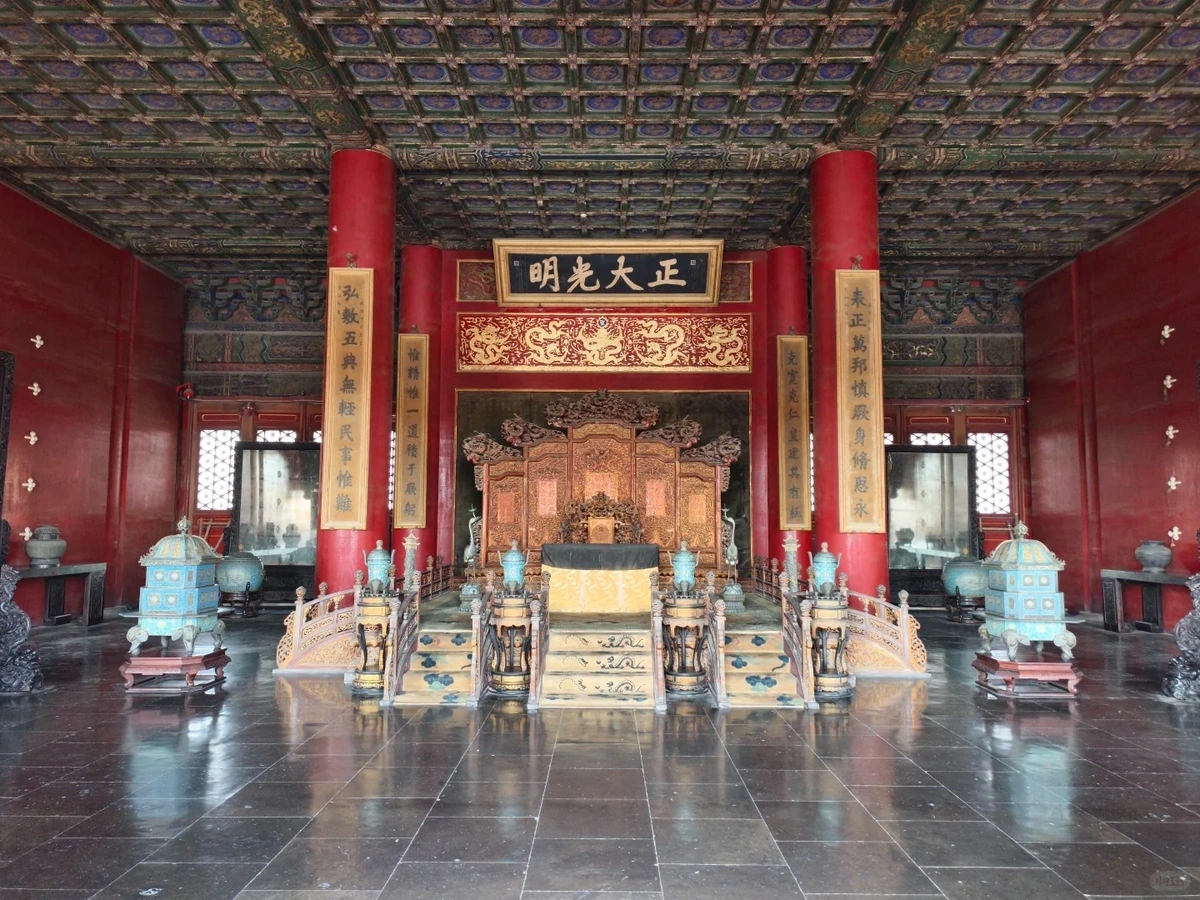
Palace of Heavenly Purity
3. Palace of Earthly Tranquility (Kunning Gong) — The Empress's Main Residence
Location: Behind the Palace of Heavenly Purity (Qianqing Gong), along the central axis of the Inner Court.
Highlights: The residence of the Empress; its connections to the Eastern and Western Palaces, offering insight into the layout of the living quarters for imperial consorts.
Recommended for: Those interested in life within the inner palace and the hierarchy of the imperial court.
4. The Imperial Garden — The royal garden at the end of the central axis
Location: Behind the Palace of Earthly Tranquility (Kunning Gong), near the Gate of Divine Prowess (Shenwu Men).
Highlights: Centuries-old trees, unique rock formations, and pavilions; the garden is particularly stunning when the crabapple trees are in full bloom; the colorful pebble-mosaic pathways feature over 900 intricate patterns depicting figures, flowers, natural scenery, Peking Opera characters, and legendary tales.
Best for: Those wishing to take a breather, snap photos, and admire the finer details after touring the main halls.
5. Gallery of Treasures – Witness the pinnacle of imperial craftsmanship
Location: Palace of Tranquil Longevity (Ningshou Gong) area.
Highlights: Treasures made of jade, gold, silver, pearls, and various gemstones, displayed across six sections.
Best for: Those who appreciate exquisite artifacts and the artistry of jewelry making.
6. Gallery of Clocks and Watches – See "Western novelties" that mark the passage of time
Location: Hall for Ancestral Worship (Fengxian Dian).
Highlights: Exquisite timepieces from various eras and countries, displayed in five sections to showcase the evolution of clockmaking.
Best for: Those interested in mechanics, East-West cultural exchange, and imperial collections.
Taking photos: Don't just crowd the center axis.
Dusk: As closing time approaches, the number of visitors dwindles. The setting sun enhances the interplay of light and shadow on the architecture, creating an ideal atmosphere for capturing the solemn, tranquil essence of the palace.
Recommended Shooting Spots:
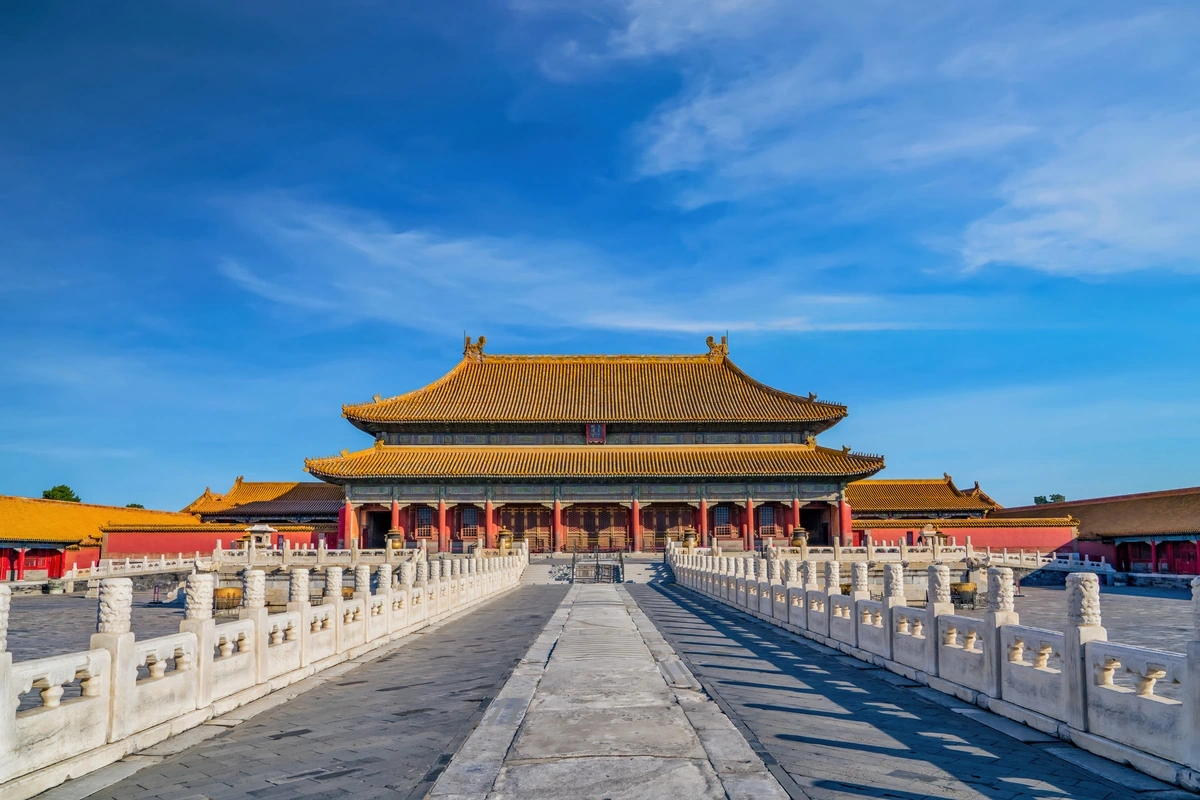
Near the bridge and steps in front of the palace: Try holding your phone high to capture expansive, wide-angle shots.
The "Long Alleys" (narrow passageways between red walls): Position your subject within the corridor and shoot from a low angle to create a sense of depth and a slightly melancholic mood.
Composition Tips: Palace architecture lends itself well to frontal, square-on compositions that highlight symmetrical beauty. Don't focus solely on the central axis; the eastern and western sides are less crowded, making it easier to capture uncluttered shots.
Avoiding Passersby: Frequently change your position and angle; otherwise, tourists wandering into the frame can disrupt the composition.
1791966008900-qyk17xp7.webp
Food & Drink: Palace Supply Points
The Forbidden City covers a vast area, so you may need to refuel along the way. There are several dining options within the complex:
Ice Cellar Restaurant (Bingjiao Restaurant): Located near the Palace of Compassion and Tranquility (Cining Gong), offering ice cream and light meals.
Forbidden City Restaurant: Located next to the Palace of Earthly Tranquility (Kunning Gong), serving Chinese-style fast food.
Wanchun Jinfu Afternoon Tea: Located next to the Palace of Earthly Tranquility (Kunning Gong), offering Chinese tea.
It is advisable to bring some water with you, especially in the summer. If you prefer a proper sit-down meal, you might consider having your main meal either before entering or after leaving the complex.
After exiting the Forbidden City through the Shenwu Gate (Gate of Divine Prowess), you can conveniently visit Jingshan Park. Ascending Jingshan Hill offers a panoramic view of the Forbidden City, making it an excellent vantage point for understanding the layout of its central axis. If time permits, you can extend your itinerary to include Beihai Park and the Tiananmen area, or incorporate the Forbidden City into a broader tour of China's historic ancient capitals.
ChinaTravelElite Travel
If you would like more travel information, please follow us. Should you require travel services, feel free to get in touch—we can provide customized solutions tailored to your specific needs.
Relevant travel itineraries for Beijing:
Beijing Forbidden City and Tiananmen Day Tour
Beijing 4-Day Private Tour with Driver
Related Beijing travel guides: Hiking the Great Wall: A Complete Guide to the Best Sections
