Many travelers visiting China yearn to step into an ancient towns of China—to escape the modern metropolis and touch the pulse of a bygone era. Yet, each of these historic towns possesses its own distinct character and style. The water towns of the south are defined by their canals, bridges, and the reflections dancing upon the water; the villages of Huizhou are shaped by their unique architecture and intricate water systems; Pingyao—a walled county seat dating back to the Ming and Qing dynasties—is defined by its imposing fortifications and its historical legacy of commerce and finance. Meanwhile, Fenghuang, Lijiang, and Zhenyuan each embody the spirit of the rivers and the mountain-dwelling ethnic minority cultures that have long called these places home.
Spanning vast geographical distances across China, these seven destinations cannot—and should not—be rushed through in a single, whirlwind trip. As bespoke travel consultants, we advise against a "check-the-box" style of sightseeing. This guide explores the unique essence of each ancient town and offers a selection of curated, ready-to-implement travel themes. Based on your personal preferences, we can craft a tailor-made 7–10 day itinerary just for you.
A Quick Look at Seven Locations
Destination | Type | style |
Pingyao Ancient City | Ancient Walled Cities of the North | A quintessential example of a Ming and Qing dynasty county seat; the ancestral home of Shanxi merchants and their financial empire. |
Fenghuang Ancient City | Ancient Town on the Tuojiang River (Western Hunan) | Stilted houses line the water, transforming into a sea of lights by night. |
Lijiang Ancient City | Ancient Naxi Towns of the Plateau | A vital hub on the Ancient Tea Horse Road, nestled beneath snow-capped mountains and boasting a vibrant nightlife. |
Zhouzhuang | Jiangnan Water Towns | The ultimate embodiment of the classic Chinese scene: small bridges, flowing water, and traditional homes. |
Gubei Water Town | Northern "Great Wall + Water Town" Complexes | A resort-style water town situated at the foot of the Simatai Great Wall. |
Zhenyuan Ancient City | "Taiji" Water Town in Southeastern Guizhou | The Wuyang River winds through the town in an S-curve; one of the least commercialized destinations. |
Hongcun | Villages of the Miao and Dong Ethnic Groups | An ancient village with an ox-shaped water system—a living ink-wash painting of white walls and dark-tiled roofs. |
1. Ancient City of Pingyao · Shanxi
Pingyao features one of the best-preserved examples of a Ming and Qing dynasty county-seat layout in China, and it was designated a World Cultural Heritage site in 1997. Its core narrative is not one of "gentle waterside charm," but rather centers on its city walls, piaohao (traditional draft banks), and the merchants of Shanxi—for it was here that the precursors to modern Chinese banking once operated.
Tickets
A combined ticket for 22 attractions within the ancient town costs ¥125 (March–November); during the off-season (November–March), the price drops to approximately ¥90.Valid for 3 days.
How to play
One must-do activity is to climb the city wall. Ascending the wall from the South Gate (Yingxun Gate) offers a bird’s-eye view of the "Turtle City" layout—the quickest way to gain an understanding of Pingyao.
Rishengchang Draft Bank: Known as the "rural ancestor" of China’s banking industry, it offers visitors the chance—for a small fee—to fill out and take home a traditional-style bank draft.
Experience "Seeing Pingyao Again" (又见平遥): an immersive, walk-through performance lasting approximately 90 minutes. Tickets are priced at 238 yuan; the show is closed on Mondays.
2. Fenghuang Ancient Town · Hunan
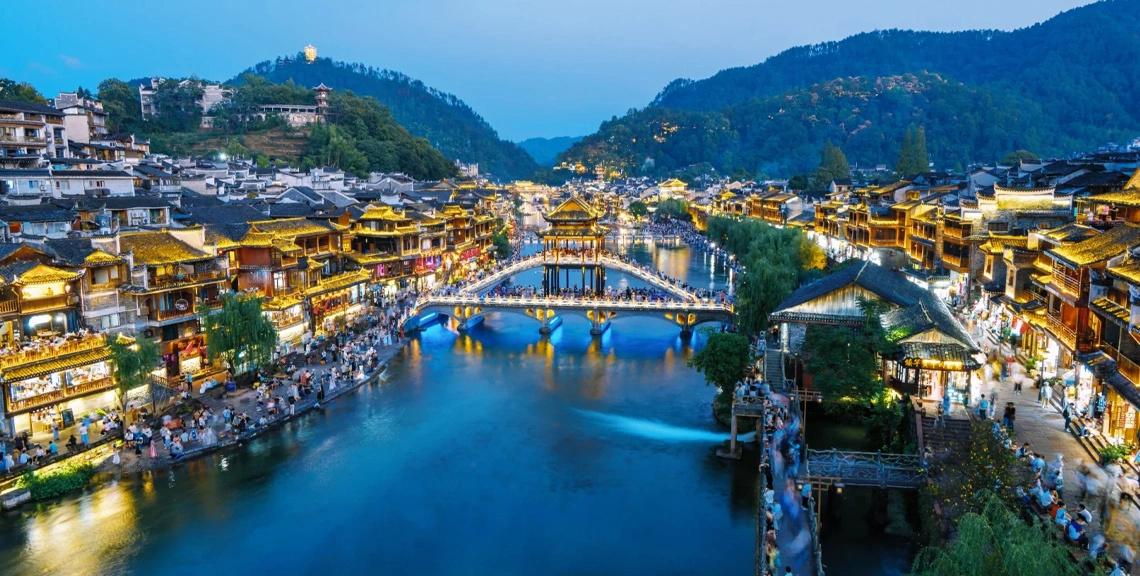
The distinct character of Fenghuang Ancient Town stems from the stilt houses lining the Tuojiang River and the world of Western Hunan as depicted in the writings of Shen Congwen. The core experience here lies not in "checking off" tourist attractions, but in a unique sense of time: the river mist at dawn and the glowing lights after nightfall make the town feel like two entirely different places.
Tickets
(March–November) Combined ticket: ¥128, valid for 3 days; (December–February) Off-season pricing applies, which is more affordable.
How to Experience It
The early morning, from 6:30 to 8:00, reveals the "first layer" of Fenghuang Ancient Town. With the morning mist still lingering over the Tuojiang River and the "stepping stones" (tiaoyan) and Wanming Pagoda largely free of crowds, this is the perfect window of time to capture images with an ink-wash painting aesthetic.
From dusk into the night, the town enters its "second layer." The lights typically come on after 6:30 PM, with the atmosphere reaching its peak after 7:00 PM. The second floor of the Rainbow Bridge (Hongqiao) is a classic vantage point for viewing the reflections of the town’s lights on the Tuojiang River; alternatively, you can take a night boat cruise to see the illuminated stilt houses lining the riverbanks from the water.
If you wish to gain a deeper understanding of the cultural essence of Western Hunan, dedicating part of your day to the Former Residence of Shen Congwen and the Ancient Town Museum will be far more rewarding than repeatedly wandering through the commercial streets.
Recommended Itineraries: Zhangjiajie 5-Day Private Tour Wulingyuan and Fenghuang
3. Lijiang Old Town · Yunnan
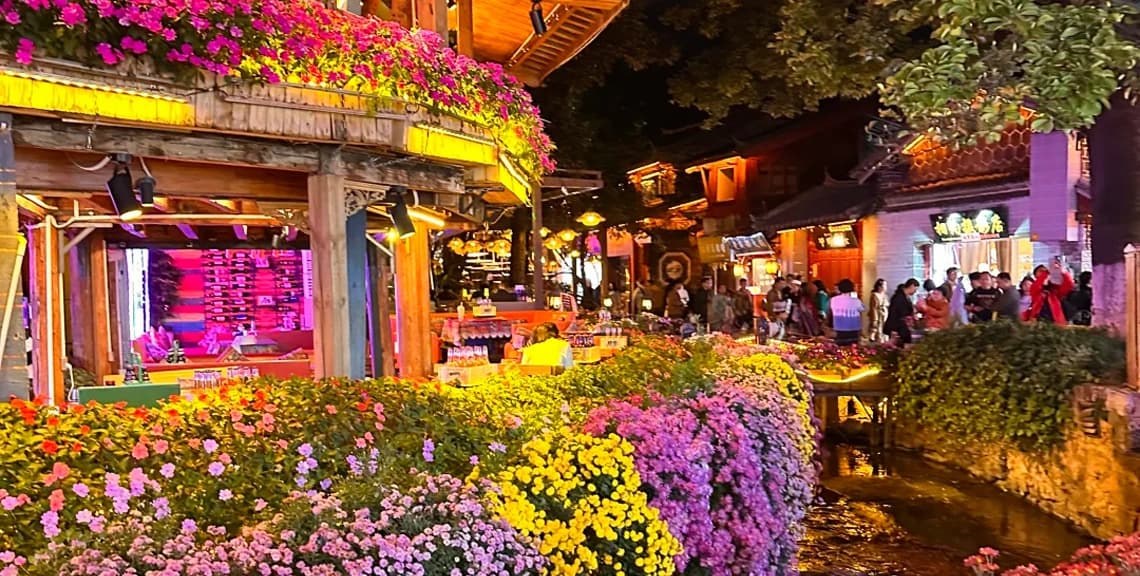
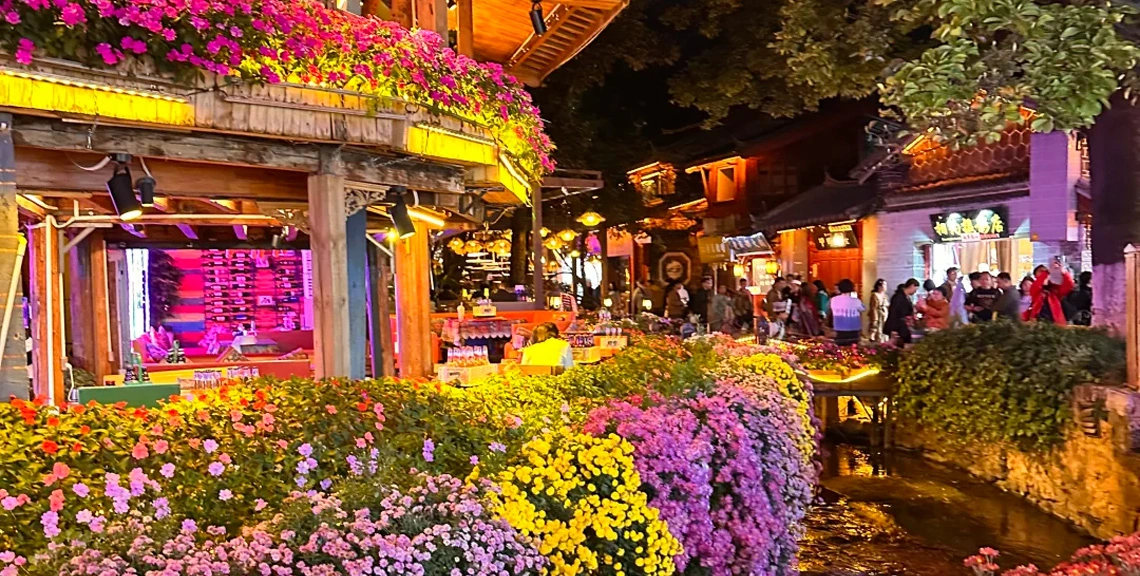
Lijiang Old Town, a significant settlement of the Naxi people along the Ancient Tea Horse Road, is also a World Cultural Heritage site. While often labeled as "commercialized," Lijiang—in the early morning and late at night—remains a place truly worth experiencing: the former reveals itself through bluestone-paved paths and flowing streams, while the latter comes alive with lanterns and the traditional da tiao (circle dance) of the Naxi people.
Tickets
The ancient town is open to the public free of charge. Within it, the Mu Residence (Mu Fu)—the former estate of the Naxi hereditary chieftains—charges an admission fee of 40 yuan; it is often said that "the Forbidden City stands in the north, while the Mu Residence stands in the south." The Wangu Pavilion on Lion Hill (Shizi Shan) costs approximately 35 yuan to enter and serves as a prime vantage point for overlooking the rooftops of the ancient town.
How to Explore
Divide your time in Lijiang into three distinct segments:
Early morning (7:00–9:00): Head to the Big Waterwheel, Sifang Street, or any of the uphill alleyways. At this hour, the Old Town is virtually free of tourists; the sounds of flowing water and the sight of weathered stone-paved paths take center stage—it’s also the perfect window for photography.
Afternoon: Visit the Mu Residence (Mufu). If you only choose one paid attraction, this is the one; it best explains why Lijiang is, at its heart, a Naxi city. The complex blends Han, Naxi, and Tibetan architectural styles, and from the hill behind it, you can enjoy a panoramic view of the Old Town.
Evening (around 19:30): Return to Sifang Street to witness the Naxi "Da Tiao"—a communal, circle-dance tradition. The atmosphere is relaxed and welcoming; you don’t need to know the steps—feel free to simply watch from the sidelines or jump in and join the dance.
Lijiang Old Town is a pedestrian-only area; the stone-paved paths are not well-suited for wheeled suitcases, so it is recommended to leave large luggage at your guesthouse reception or use a backpack instead.
Recommended Itineraries: Dali to Shaxi Ancient Town Private Day Tour
4. Zhouzhuang · Jiangsu
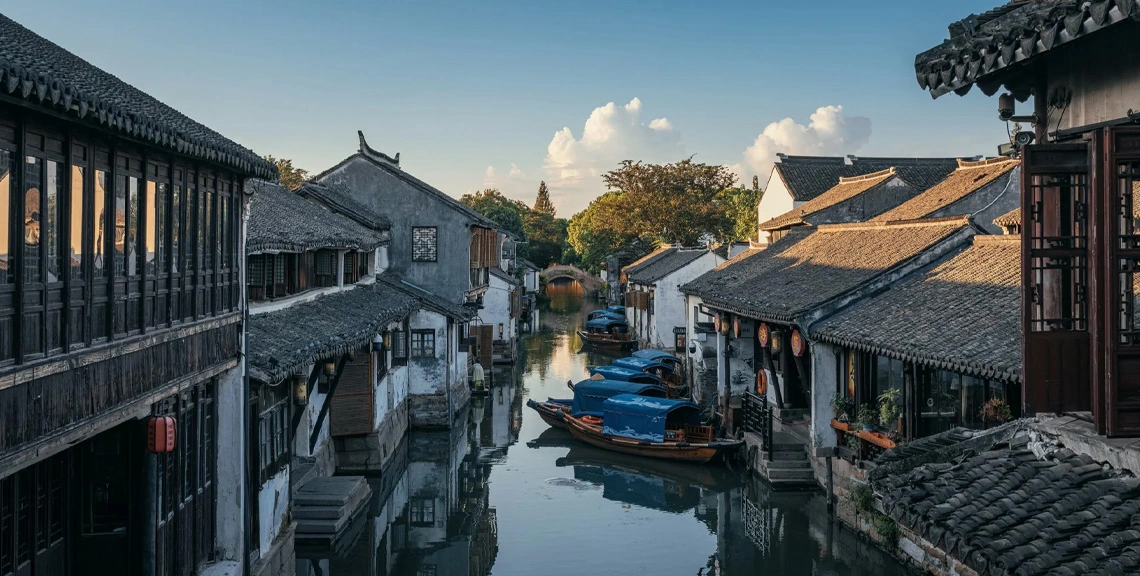
Zhouzhuang serves as the quintessential visual archetype of a "Jiangnan water town"—featuring twin bridges, traditional sculled boats, and white-walled, dark-tiled buildings reflected in the waterways. The twin bridges gained fame through the painting Memory of My Hometown by artist Chen Yifei, which also helped establish Zhouzhuang as one of the first ancient Jiangnan towns to capture international attention.
Tickets
Zhouzhuang Ancient Town: 100 yuan/person (50% discount applies on weekdays),The scenic area is open from approximately 8:00 to 21:00, with the main halls remaining accessible until 21:00.
How to play
The best way to experience Zhouzhuang is not to "cover every inch," but rather to "take a boat ride and slow your pace."
Start at the Twin Bridges (Shuangqiao). Formed by the intersection of a square stone bridge and an arched one—resembling the shape of a key—they offer the most perfect reflections when the water is calm in the early morning. Heading from the Twin Bridges toward the Zhang Residence, you can observe the unique layout of a traditional waterside manor, where "sedan chairs could enter through the gate, and boats could pass right through the house." Further along lies the Shen Residence—the former home of the family of Shen Wansan, a legendary tycoon of the Jiangnan region—which serves as a key to understanding the origins of Zhouzhuang’s historical wealth.
It is best to save your boat ride for the evening. A single boat costs approximately 150 yuan and can accommodate up to six passengers; shared boat options are also available. As the boatwoman rows through the narrow waterways, the lanterns along the banks begin to glow—this is the moment when Zhouzhuang most closely resembles a "dreamlike water town."
Zhouzhuang is not very large; half a day to a full day is sufficient. If you prefer a quieter experience, try to enter the main historic area before 8:00 AM.
5. Gubei Water Town · Miyun, Beijing
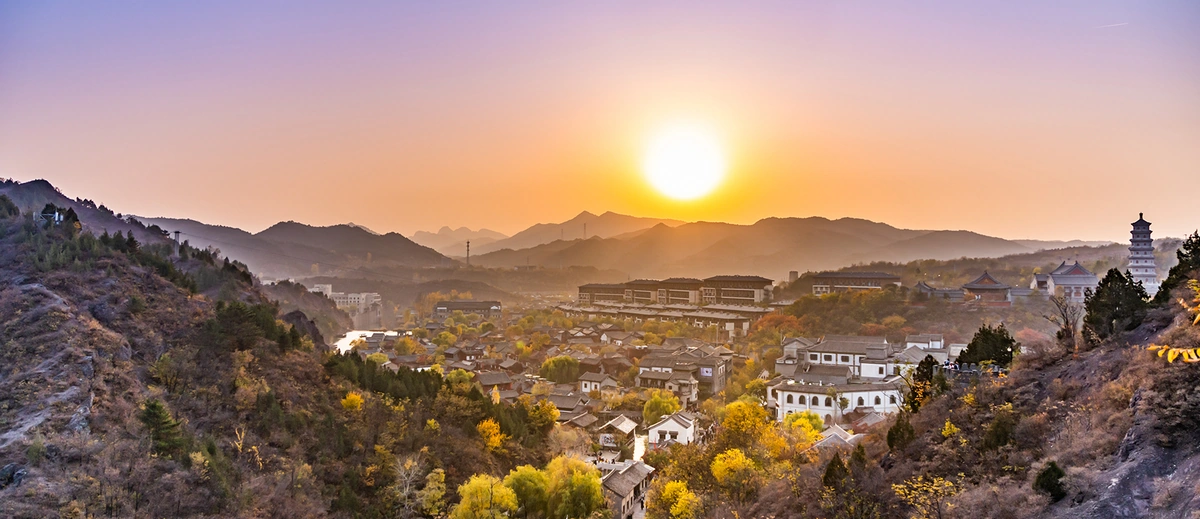
Gubei Water Town is a newly constructed, resort-style "northern water town," yet it possesses an almost inimitable advantage: its immediate proximity to the Simatai section of the Great Wall—one of the best-preserved portions of the Ming-era Great Wall, which also offers the unique opportunity for night visits. If you are staying in Beijing and wish to experience both the atmosphere of a "water town" and the Great Wall within a single day, this is the most efficient choice.
Tickets
Tickets for the water town cost approximately 120 RMB; a combined ticket for the water town and the Simatai Great Wall costs approximately 170 RMB.
You can also choose to visit the Simatai Great Wall at night.
How to Explore
A classic one-day itinerary looks like this: arrive in the town in the afternoon, head up to the Great Wall at dusk, and take in the illuminated water town after nightfall.
During the day, you can visit the Yongshun Dye House—where courtyards draped in traditional blue-patterned calico make for excellent photos—as well as the Sima Small-Batch Distillery and the Zhenyuan Escort Agency; these are some of the most iconic spots within the water town. At dusk, take the cable car up to the Simatai section of the Great Wall. Gazing down at the glowing lights of the water town from the illuminated Great Wall is the quintessential Gubei Water Town experience. If night tours are available, carrying a lantern while walking along a stretch of the Great Wall—past its watchtowers—will create a truly memorable experience.
After descending, you might enjoy a soak in a hot spring at the foot of the Great Wall. From some of the pools, you can even catch a glimpse of the silhouette of the Simatai Great Wall against the night sky—a wonderfully relaxing way to end your day.
Zhenyuan Ancient Town · Guizhou
Among these seven locations, Zhenyuan is the least commercialized and the most easily underestimated. The Wuyang River winds through the town in an "S" shape, with the Prefectural Town on the north bank and the Garrison Town on the south, together forming a natural "Taiji water town" landscape. Its ancient alleys, docks, and cliffside structures retain the tranquil, understated air of a historic frontier trading hub.
Tickets
The entire ancient town is free to enter.
Optional paid attractions include: Qinglong Cave (60 yuan), Shiping Mountain (30 yuan; free if you hike up before 7:00 AM), and a night cruise on the Wuyang River (approximately 80 yuan).
How to Explore
The essence of Zhenyuan lies in its "elevated vantage points" and its "ancient alleyways."
Mount Shiping (Shiping Shan) is the ideal starting point for understanding Zhenyuan. It takes about 30 minutes to reach the summit, where an observation deck offers a panoramic view of the S-shaped Wuyang River winding through the town, framed by the rooftops of the ancient settlement. Visiting in the early morning allows you to avoid the crowds and catch the ethereal morning mist.
Qinglong Cave (Qinglong Dong) is not actually a cave, but a complex of Confucian, Buddhist, and Taoist structures built directly onto a cliffside—often referred to as the "Hanging Temple of the South." Looking out from its window openings, you can see the Wuyang River and the ancient town spread out beneath you; it is perhaps the spot where Zhenyuan’s cultural heritage and natural landscape are most harmoniously intertwined.
The ancient alleyways—such as Sifangjing Lane, Fuxing Lane, and Renshou Lane—are free to explore. They are characterized by a unique architectural quirk known as "crooked gates and winding paths"—entrances are set at an angle, and the lanes twist and turn, reflecting the feng shui principles once favored by merchants during the Ming and Qing dynasties. In the early morning, these alleys are virtually deserted; with lanterns still glowing and wisps of cooking smoke beginning to rise, it is the perfect time for photography or simply soaking in the authentic, lived-in atmosphere of the town.
Zhenyuan is a place best enjoyed with a leisurely overnight stay. Its nights aren’t defined by staged tourist performances; rather, they offer the simple pleasures of an ordinary evening—strolling along the river, watching the lights come on at Zhusheng Bridge, and sitting down for a meal of sour-soup fish.
7. Hongcun · Anhui
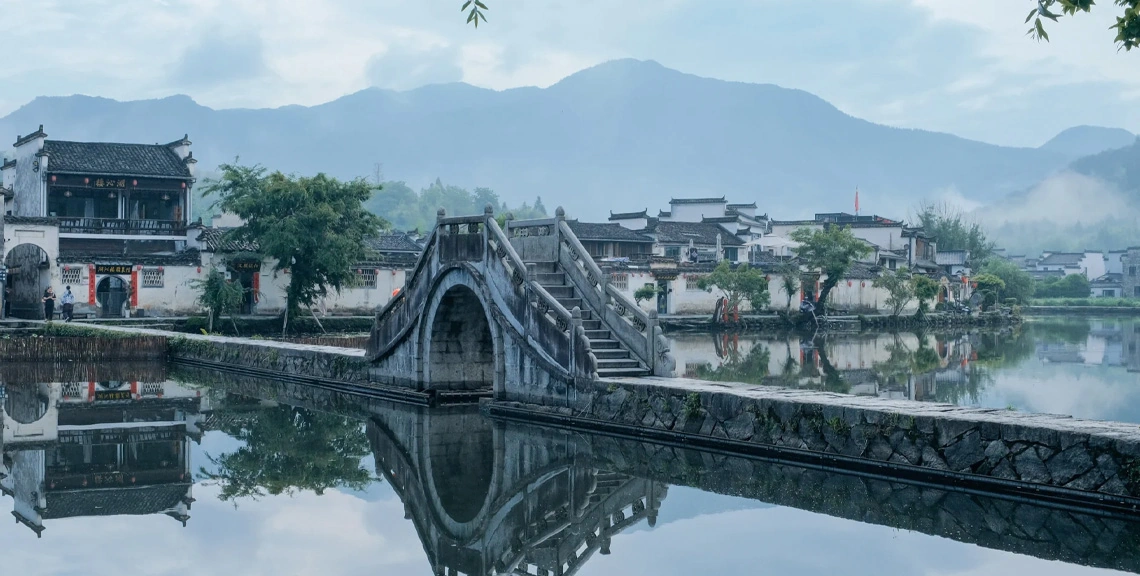
Hongcun is a World Cultural Heritage site and the most renowned representative of "Huizhou-style villages." Its primary highlights include an ingenious water system designed in the shape of an ox, as well as classic Huizhou-style architecture—characterized by white walls, dark-tiled roofs, and iconic "horse-head" gables. The entire village functions as a cohesive architectural ensemble, interconnected by its water network, with South Lake (Nanhu) and Moon Pond (Yuezhao) serving as its two most photogenic "eyes."
Tickets
Tickets cost 94 RMB when purchased via the platform, or 104 RMB if bought on-site. They allow for multiple entries over a 3-day period; entry is granted upon verification of your passport and ticket.
How to Explore
During the day, follow the route along the waterways: South Lake (Nanhu) → South Lake Academy → Moon Pond (Yuezhao) → Wang Family Ancestral Hall → Chengzhi Hall. The Huizhou-style wood carvings in Chengzhi Hall represent the pinnacle of architectural detail in Hongcun. Moon Pond—a semi-lunar-shaped pool surrounded by a series of stacked "horse-head" gables—offers the most iconic view of the village.
If you are staying overnight, visit Moon Pond between 5:30 PM and 7:00 PM after the lanterns are lit. The reflection of the lanterns and white walls on the water’s surface creates a serene, beautiful atmosphere, entirely different from the experience during the day.
In addition to Hongcun, you can also visit attractions such as Xidi, Chengkan, and Mount Huangshan.
Some practical travel tips
Your passport serves as both your "admission ticket" and your "ID card." Most ancient town tourist sites in China implement a real-name entry system, where admission tickets are linked to the identification document used for purchase. You will need to present the same passport used to buy your ticket in order to gain entry.
“Free entry to the town” does not mean “everything is free.” While the core districts of Pingyao, Fenghuang, Lijiang, and Zhenyuan are open to the public at no cost, attractions such as city walls, historic residences, ancestral halls, boat rides, and smaller sites within these areas typically require separate tickets.
Avoid the crowds during Chinese public holidays. During the Spring Festival, the May Day holiday, and National Day (October 1–7), the number of visitors in these ancient towns reaches an entirely different scale.
Early morning and evening reveal the "true selves" of these ancient towns. Before 8:00 AM, the towns resemble a hazy ink-wash painting; after 6:00 PM, they light up, transforming into an entirely different kind of scenery.
In addition to these ancient cities, there are other noteworthy ancient towns in the same region. If you enjoy exploring ancient towns, be sure to follow us at ChinaTravelElite to discover more fascinating destinations.